

You are using an out of date browser. It may not display this or other websites correctly.
You should upgrade or use an alternative browser.
You should upgrade or use an alternative browser.
Intriguing weather in 2018
- Thread starter chris83
- Start date
- Status
- Not open for further replies.


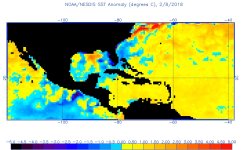
A weak La Niña continues in the Pacific Ocean, but may have peaked in recent weeks. Five out of eight models suggest this La Niña will end during the southern autumn.
The pulse of the MJO, which is currently moving across the tropical Pacific Ocean, may also contribute to the weakening of the current La Niña. The very strong MJO pulse has initiated a strong burst of westerly winds which are forecast to move across the Pacific Ocean in the coming weeks, potentially aiding transport of warmer water from the western Pacific to the central and eastern Pacific Ocean. If the enhanced westerly winds continue right across the tropical Pacific Ocean, they would also inhibit upwelling of cold water along the South American coastline.
The pulse of the MJO, which is currently moving across the tropical Pacific Ocean, may also contribute to the weakening of the current La Niña. The very strong MJO pulse has initiated a strong burst of westerly winds which are forecast to move across the Pacific Ocean in the coming weeks, potentially aiding transport of warmer water from the western Pacific to the central and eastern Pacific Ocean. If the enhanced westerly winds continue right across the tropical Pacific Ocean, they would also inhibit upwelling of cold water along the South American coastline.

Reed
Senior Insider
A weak La Niña continues in the Pacific Ocean, but may have peaked in recent weeks. Five out of eight models suggest this La Niña will end during the southern autumn.
The pulse of the MJO, which is currently moving across the tropical Pacific Ocean, may also contribute to the weakening of the current La Niña. The very strong MJO pulse has initiated a strong burst of westerly winds which are forecast to move across the Pacific Ocean in the coming weeks, potentially aiding transport of warmer water from the western Pacific to the central and eastern Pacific Ocean. If the enhanced westerly winds continue right across the tropical Pacific Ocean, they would also inhibit upwelling of cold water along the South American coastline.
Hey Chris 83,
While all of your data is certainly interesting, I have been sticking to the old stand by method.............Step outside in the morning and go WOW it is really windy today! Just to be sure I have made an accurate assessment, I do the same thing at night and viola, my initial daytime research is backed up. While certainly not a scientific approach, I feel like I can stand by my reporting
 .
.Hey Chris 83,
While all of your data is certainly interesting, I have been sticking to the old stand by method.............Step outside in the morning and go WOW it is really windy today! Just to be sure I have made an accurate assessment, I do the same thing at night and viola, my initial daytime research is backed up. While certainly not a scientific approach, I feel like I can stand by my reporting
It is surely the best way to get it done.Bravo.
This thread serves a totally different purpose,to be honest.SST,MJO and "la nina" updates are mentioned for very specific reasons.
A deep thought for my friends in Tonga
https://www.wunderground.com/cat6/eyewall-fearsome-cyclone-gita-churns-across-tonga
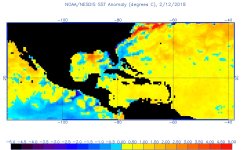
Cat 4 hurricane....and what is to blame ? unusually high SST ..as usual.
https://www.wunderground.com/cat6/eyewall-fearsome-cyclone-gita-churns-across-tonga
Cat 4 hurricane....and what is to blame ? unusually high SST ..as usual.


amyb
Senior Insider
Hold on, I'll be back when I get my degree in Meteorology
That is funny Jim.I use the Kimberly method and open a door and step outside....
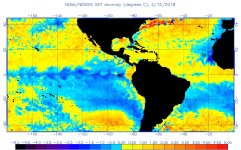
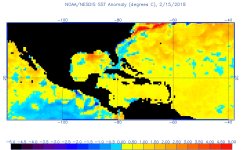
Chris . . . I admire your thoughtful efforts to inform us & can tell that you do so with great research & analysis. Having said that, however, I need to comment that I’m seriously color blind, so the graphics don’t serve me as either of us would like! I struggle with the color codes. As a result, I find your periodic “Readers Digest” assesments to be most helpful!
Chris . . . I admire your thoughtful efforts to inform us & can tell that you do so with great research & analysis. Having said that, however, I need to comment that I’m seriously color blind, so the graphics don’t serve me as either of us would like! I struggle with the color codes. As a result, I find your periodic “Readers Digest” assesments to be most helpful!
Cheeky )
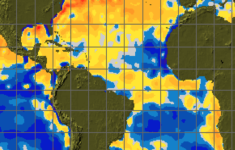
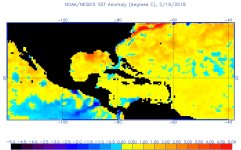
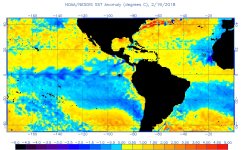
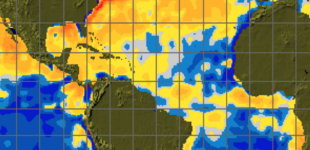
The more orange and red you see ,the more problems you can expect going forward
Blue is your new favorite color...
The paradigm has changed ..and orange is the proof
Another interesting article
https://www.wunderground.com/cat6/retreat-rising-sea-book-review
"“Like it or not, we will retreat from most of the world’s non-urban shorelines in the not very distant future. Our retreat options can be characterized as either difficult or catastrophic."
A real debate concerning hotels on the beach,(restaurants and clubs too)
https://www.wunderground.com/cat6/retreat-rising-sea-book-review
"“Like it or not, we will retreat from most of the world’s non-urban shorelines in the not very distant future. Our retreat options can be characterized as either difficult or catastrophic."
A real debate concerning hotels on the beach,(restaurants and clubs too)
- Status
- Not open for further replies.


