JEK
Senior Insider
Transitioning island energy for a better future

By Richard Branson
@richardbranson
12 October 2015
As residents of the Caribbean, my family have experienced first-hand the impact that climate change has on this planet. Living on Necker Island we are often subjected to powerful hurricanes and tropical storms.
This wonderful region is bearing the brunt of climate change – facing sea-level rises, increasing temperatures and extreme weather – and yet it has been powerless prepare itself for a sustainable future. High electricity prices contribute to poverty and national debts, and prevent widespread investment in the modern infrastructure to kick start development.
Image by Owen Buggy
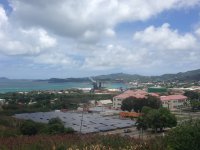
There’s tragic irony in this, however, because as the postcards show, the sun-drenched and wind-swept islands are the perfect settings in which to harvest renewable energy. Solar and wind represents a huge opportunity in sustainable development, and the Caribbean is ideally placed to demonstrate and scale innovative, clean energy solutions.
Recognising this, the Carbon War Room (CWR) and Rocky Mountain Institute (RMI) are working closely with Caribbean governments and stakeholders to identify the region’s optimal energy future. They have also recently announced a partnership with the Clinton Climate Initiative (CCI) to leverage resources and increase impact. With a vision to make the islands committed to becoming completely fossil fuel free, CWR and RMI have established the Ten Island Challenge. It’s a wonderful initiative that is encouraging a new way of thinking among many of the region's leaders.
 Image from Carbon War Room
Alongside Aruba, the Bahamas, Belize, Jamaica, the Colombian islands of San Andrés and Providencia, Saint Lucia, Seychelles, and Turks and Caicos, we are dedicated to making an energy transition – in fact, we’re aiming to turn Necker into one of the most renewably-powered islands in the world.
This April on Necker we switched on a new solar energy system, consisting of 1232 photovoltaic solar panels. The next steps are for wind turbines and batteries to come online in November, which should provide diesel savings of more than 75 per cent. As the system develops, we will introduce energy efficiency measures and new innovative technologies to try to get the diesel reduction to 100 per cent.
 Image by Owen Buggy
We understand that we’re in a unique position, but so is the Caribbean as a whole. We can all benefit from the positive environmental, social and economic impacts of sustainability, and the Ten Island Challenge is showing us how. In even more wonderful news, the islands involved now serve as energy transition models and are acting as a catalysts for change for island nations and isolated economies around the world.
The small islands of the Caribbean may be highly vulnerable to climate change risks, but they have wonderful potential to be global leaders in climate change action.
 Image from Carbon War Room
I’m excited about the potential this initiative has to help the Caribbean truly find its feet, and I’m looking forward to working with CWR and RMI, as well as the Clinton Climate Initiative, to further develop renewable energy and create resilient communities in this stunning corner of the globe.
By Richard Branson
@richardbranson
12 October 2015
As residents of the Caribbean, my family have experienced first-hand the impact that climate change has on this planet. Living on Necker Island we are often subjected to powerful hurricanes and tropical storms.
This wonderful region is bearing the brunt of climate change – facing sea-level rises, increasing temperatures and extreme weather – and yet it has been powerless prepare itself for a sustainable future. High electricity prices contribute to poverty and national debts, and prevent widespread investment in the modern infrastructure to kick start development.
Image by Owen Buggy
There’s tragic irony in this, however, because as the postcards show, the sun-drenched and wind-swept islands are the perfect settings in which to harvest renewable energy. Solar and wind represents a huge opportunity in sustainable development, and the Caribbean is ideally placed to demonstrate and scale innovative, clean energy solutions.
Recognising this, the Carbon War Room (CWR) and Rocky Mountain Institute (RMI) are working closely with Caribbean governments and stakeholders to identify the region’s optimal energy future. They have also recently announced a partnership with the Clinton Climate Initiative (CCI) to leverage resources and increase impact. With a vision to make the islands committed to becoming completely fossil fuel free, CWR and RMI have established the Ten Island Challenge. It’s a wonderful initiative that is encouraging a new way of thinking among many of the region's leaders.
Alongside Aruba, the Bahamas, Belize, Jamaica, the Colombian islands of San Andrés and Providencia, Saint Lucia, Seychelles, and Turks and Caicos, we are dedicated to making an energy transition – in fact, we’re aiming to turn Necker into one of the most renewably-powered islands in the world.
This April on Necker we switched on a new solar energy system, consisting of 1232 photovoltaic solar panels. The next steps are for wind turbines and batteries to come online in November, which should provide diesel savings of more than 75 per cent. As the system develops, we will introduce energy efficiency measures and new innovative technologies to try to get the diesel reduction to 100 per cent.
We understand that we’re in a unique position, but so is the Caribbean as a whole. We can all benefit from the positive environmental, social and economic impacts of sustainability, and the Ten Island Challenge is showing us how. In even more wonderful news, the islands involved now serve as energy transition models and are acting as a catalysts for change for island nations and isolated economies around the world.
The small islands of the Caribbean may be highly vulnerable to climate change risks, but they have wonderful potential to be global leaders in climate change action.
I’m excited about the potential this initiative has to help the Caribbean truly find its feet, and I’m looking forward to working with CWR and RMI, as well as the Clinton Climate Initiative, to further develop renewable energy and create resilient communities in this stunning corner of the globe.