

Amnios Hotel & Restaurant . . . formerly home to Hotel Villa Lodge 4 Epices & Yo Sushiama.
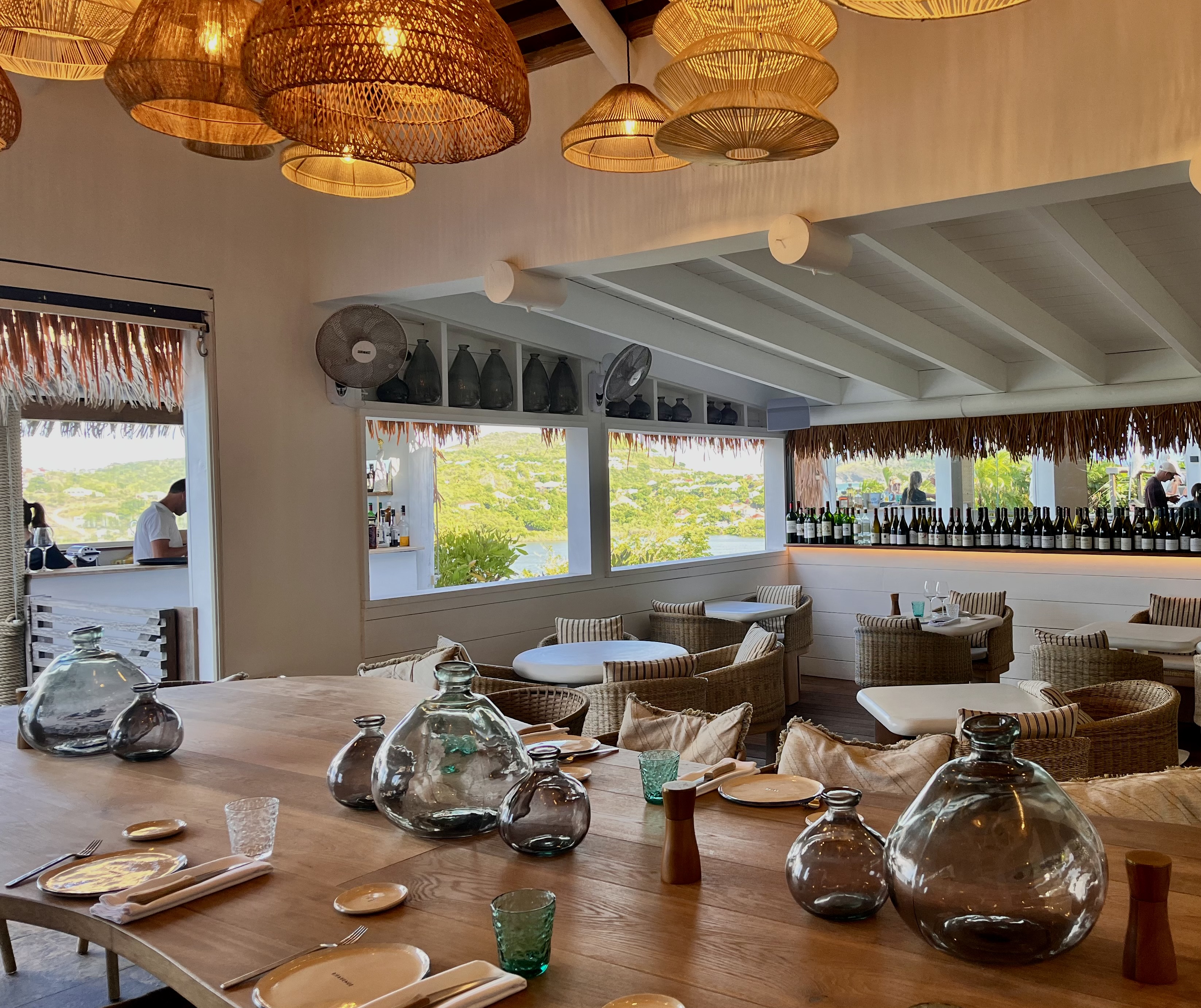
The restaurant is a lovely spot, with a large kidney-shaped table for a communal dining experience (“table d’hôte”) as well as individual dining tables.
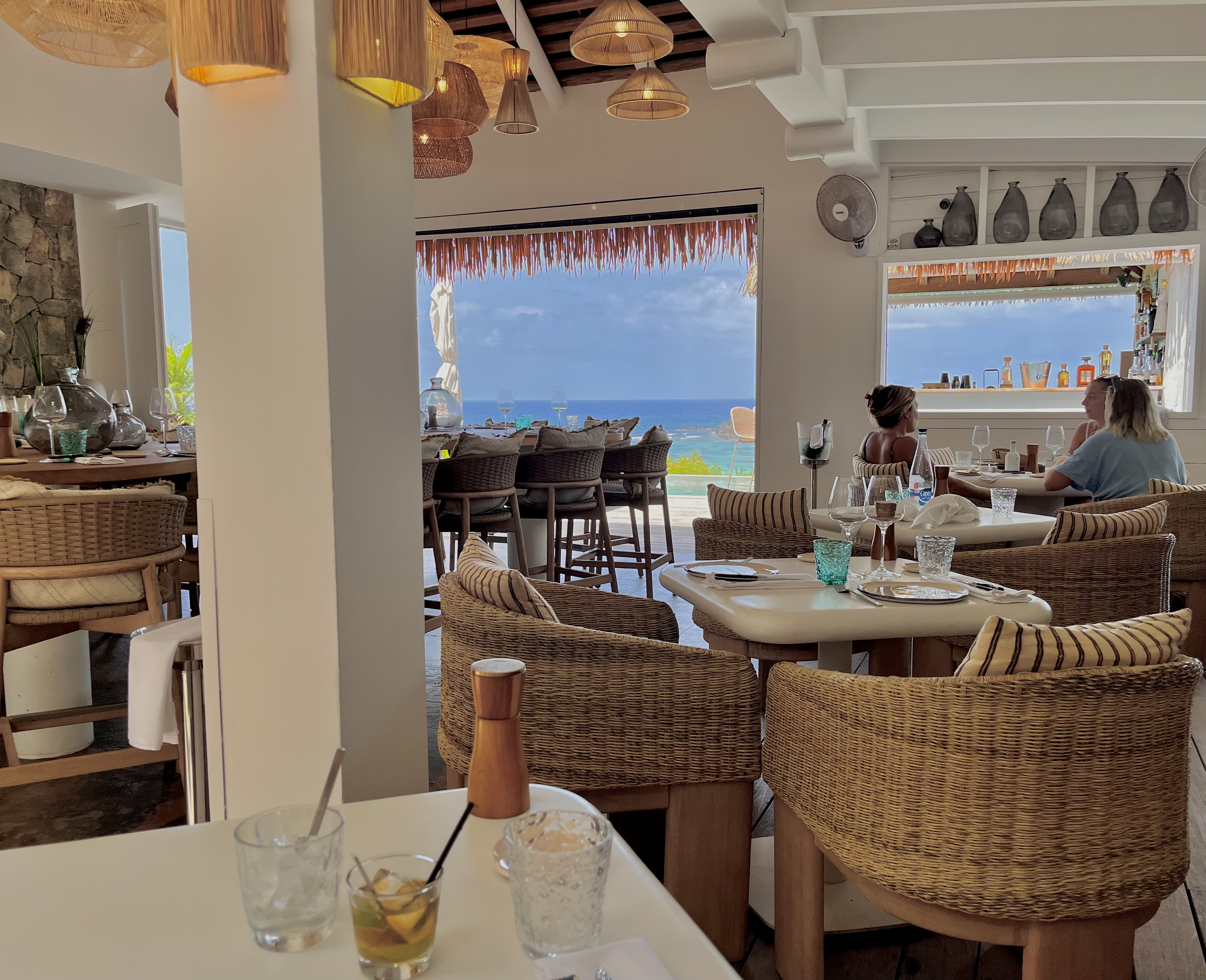
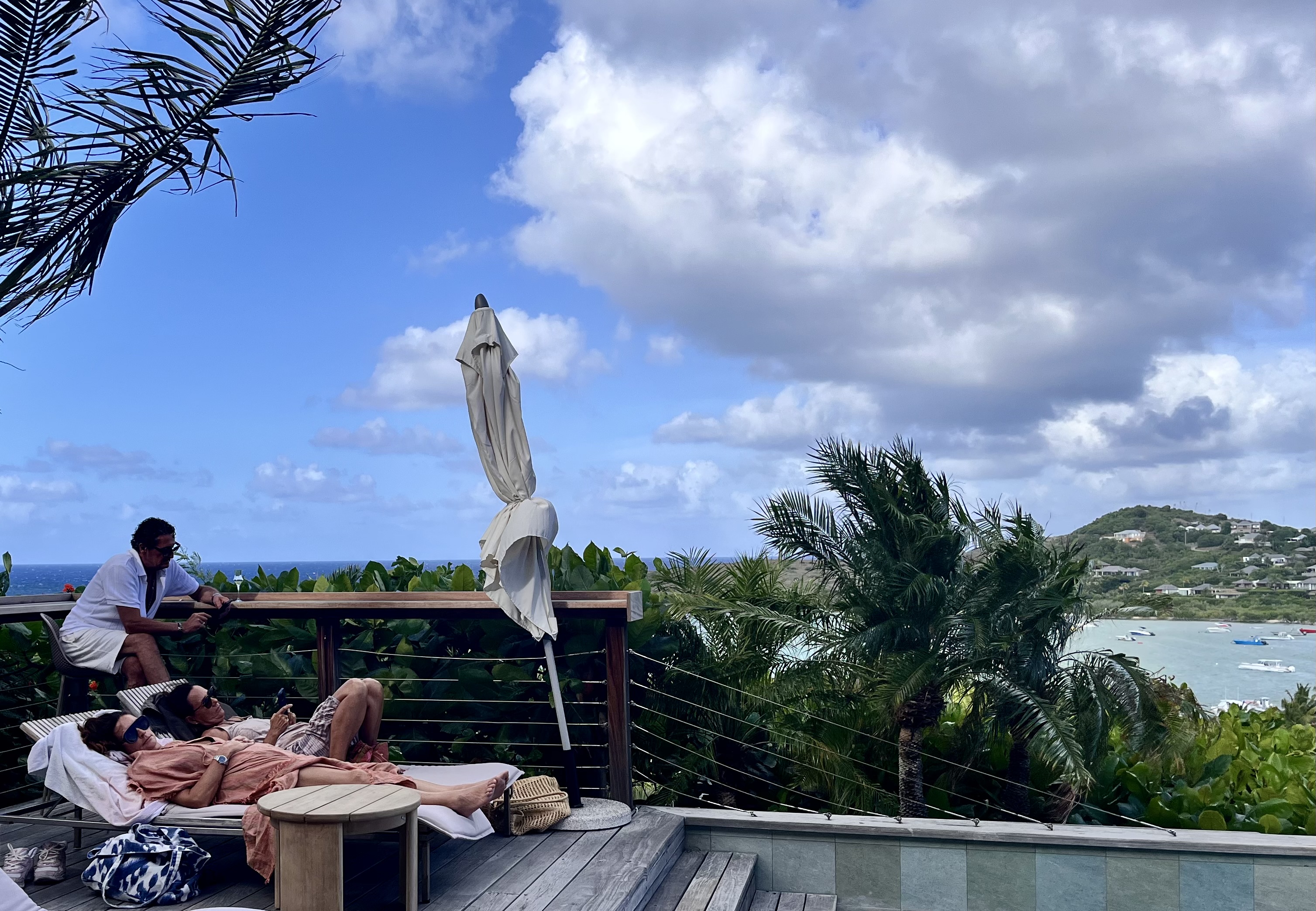
. . . an awesome Grand Cul de Sac view from the comfortable pool & bar areas

. . . and, easy to remember — “Two Juliens” (owner on the left (originally from an area of the French alps) . . . manager on the right). Manager Julien, BTW, was the very fine, modest, & worldly partner / manager of the short-lived “Chez Gus” in Gustavia. So great to find him in a new, happy place!

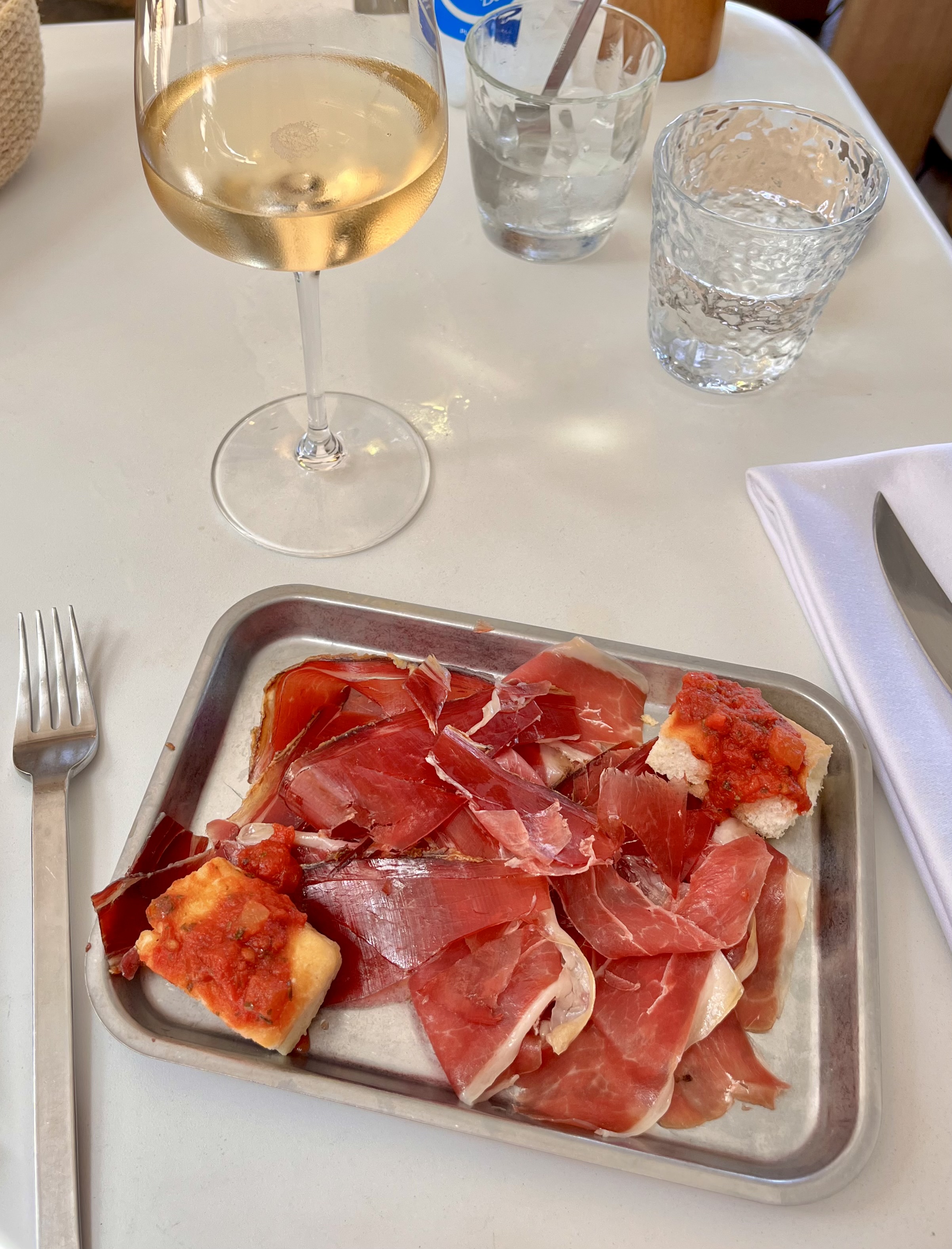
Having indulged in a large breakfast at the Villa (cleaning-out the “frig“ of especially tasty leftovers), I enjoyed a simple lunch of “Pata Negra” . . . very thinly sliced, savory Spanish ham.
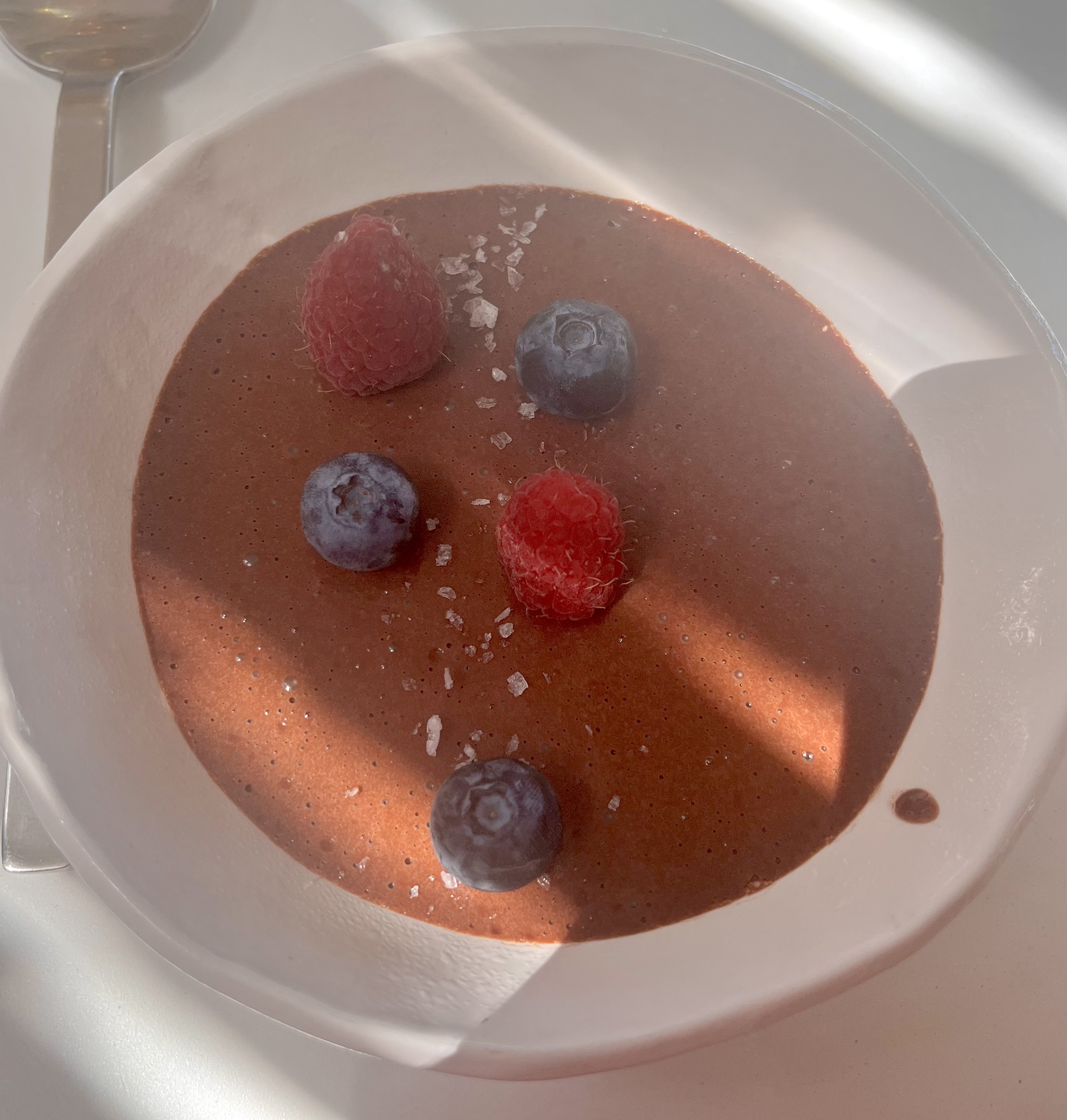
Not needing anything more, I nonetheless succumbed to ordering the chocolate mousse, which I’ve previously enjoyed & knew it to be especially dense & fudge-like . . . a chocoholic’s dream! (Two thirds of it is the Villa refrigerator . . . to be enjoyed over the next couple of days!)
A chill, lovely spot . . . with gentle, professional service . . . in an attractive, relaxed setting.
Monday - lunch
Tuesday & Wednesday - closed
Thursday, Friday, & Saturday - lunch & dinner
Sunday - lunch
The restaurant is a lovely spot, with a large kidney-shaped table for a communal dining experience (“table d’hôte”) as well as individual dining tables.
. . . an awesome Grand Cul de Sac view from the comfortable pool & bar areas
. . . and, easy to remember — “Two Juliens” (owner on the left (originally from an area of the French alps) . . . manager on the right). Manager Julien, BTW, was the very fine, modest, & worldly partner / manager of the short-lived “Chez Gus” in Gustavia. So great to find him in a new, happy place!
Having indulged in a large breakfast at the Villa (cleaning-out the “frig“ of especially tasty leftovers), I enjoyed a simple lunch of “Pata Negra” . . . very thinly sliced, savory Spanish ham.
Not needing anything more, I nonetheless succumbed to ordering the chocolate mousse, which I’ve previously enjoyed & knew it to be especially dense & fudge-like . . . a chocoholic’s dream! (Two thirds of it is the Villa refrigerator . . . to be enjoyed over the next couple of days!)
A chill, lovely spot . . . with gentle, professional service . . . in an attractive, relaxed setting.
Monday - lunch
Tuesday & Wednesday - closed
Thursday, Friday, & Saturday - lunch & dinner
Sunday - lunch



 ) Second side note: If you really want to have some fun and you have a lot of free time, click on the blue #1 above and you will enjoy this Wikipedia explanation in its entirety..my fun was vetting the whole article as if I were reading about"old friends"..and this is why I can't do book clubs..


